




 Back to all posts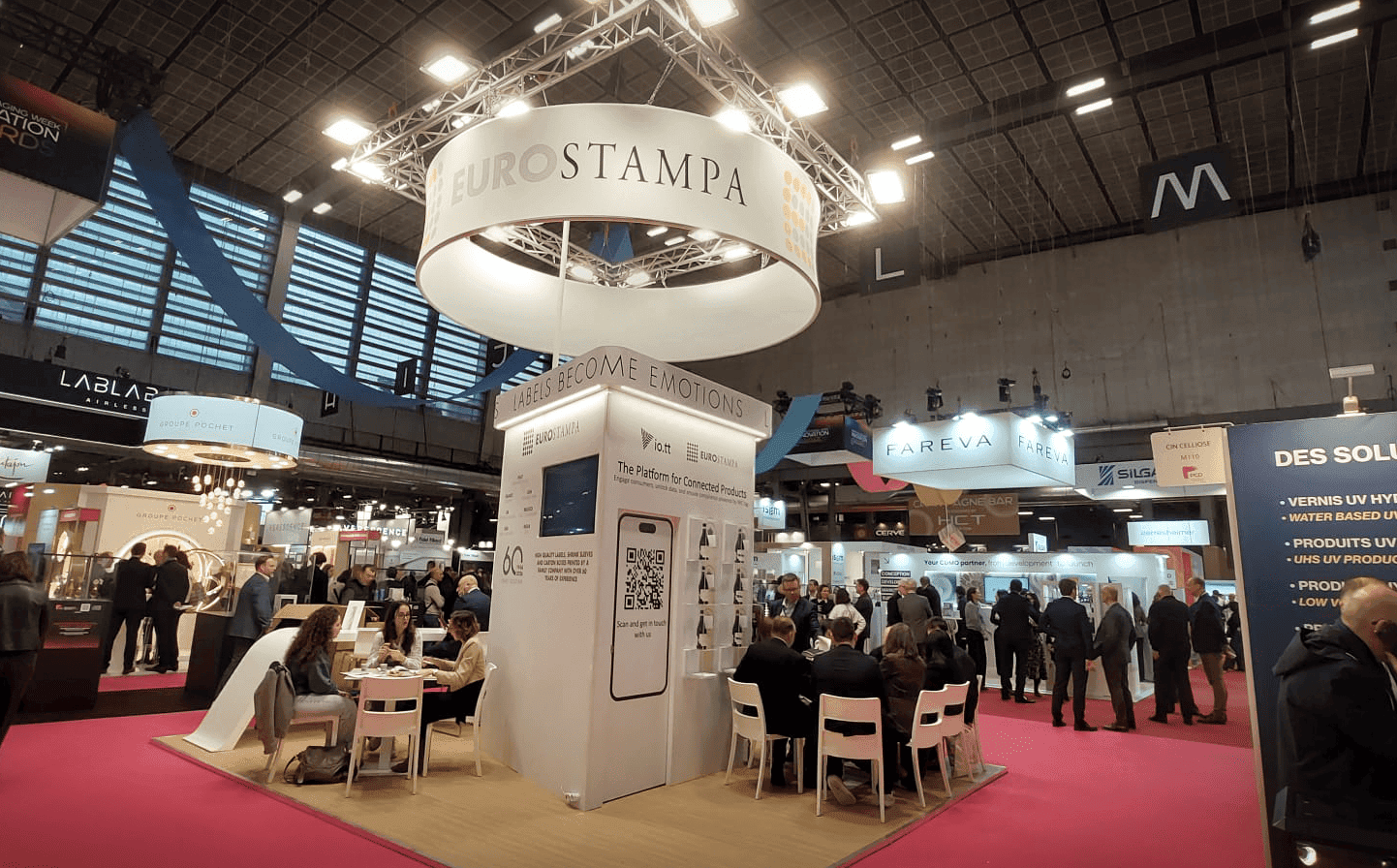
5 takeaways from Paris Packaging Week
Paris Packaging Week does one thing best: you get an unfiltered view of what’s making it into roadmaps, not just what looks good on a slide. This year Connected Packaging felt noticeably more grown up. Two shifts stood out. First, connectivity is being discussed much earlier, at the packaging design stage, with procurement in the room. Second, the expectation has broadened: compliance, trust and brand experience are now part of the same conversation.
Our very own, Eddy Peters, was flying the flag this year alongside our partner, Eurostampa. Here are his five key takeaways that will hopefully help with your planning for 2026 and beyond.
NFC is moving upstream: designed in, not bottled in
The takeaway: NFC is starting to behave like a packaging standard. The work shifts from ‘can we do it?’ to ‘what repeatable experiences should sit behind it?’.
The most interesting change wasn’t the technology. It was when it’s being considered. Eurostampa’s NFC ‘Envelope’ programme is a clear sign of what is coming: connectivity incorporated at the heart of the pack, not treated as a last-minute add on. When NFC is designed in early, it stops being a constraint and starts being a capability – better placement, cleaner aesthetics, few production trade-offs, and far more consistency across launches.
QR codes are getting a premium facelift and becoming tactile
The takeaway: QR is becoming a design element. When the code earns its place on pack, scan behaviour improves and brand teams stop treating it as a compromise.
QR is everywhere, but premium categories have always had the same tension: how do you add a code without disrupting the craft of the pack? Scodix was a good example of the new direction, premium QR that looks and feels designed, not applied. The combination of print finishing and tactile cues (texture, depth, highlights) makes the code part of the pack’s physical language. In beauty and fragrance, that matters. The moment of touch is the brand.
Authentication is becoming market specific, layered protection is winning
The takeaway: Brands are moving away from ‘pick a tech’ towards ‘design a system’, one that matches the market reality, the product, and the operational constraints.
Authentication came up everywhere, but the nuance is that “brand protection” isn’t one uniform problem. Refill and reuse in some markets. Diversion and grey market in others. High quality counterfeits elsewhere. That’s why single-mechanism thinking often disappoints. The strongest conversations were about layered systems: a physical feature you can trust, paired with a digital identity that can be verified, supported by journeys that work for whoever is doing the checking: consumer, trade or field teams.
DPP is driving urgency, but brands want more than compliance
The takeaway: The strongest DPP approaches treat compliance as the baseline, and brand value as the differentiator.
DPP wasn’t just a topic on stage, it was something brand teams were actively asking about conversations. The tone has changed. This is no longer ‘something to keep an eye on’. It is a catalyst forcing better packaging data, clearer governance, and decisions about ownership. But the more interesting point is what came next: brands don’t want DPP to become a dull data dump. They want to activate it, using the same foundation to deliver richer storytelling, services and utility. We have seen this direction already: using DPP as the backbone but designing the experience to be consumer first rather than compliance first.
Traceability is expanding, and the best programmes make the code work twice
The takeaway: The smartest programmes don’t add more complexity. They extract more value from what’s already on pack.
Traceability has traditionally lived in operations. What felt different this year is that traceability is being discussed as something that can also power consumer value. Atlantic Zeiser’s work sits firmly in traceability and code ecosystem and the opportunity is obvious. If the code already exists for operational reasons, why not use that same code to unlock consumer experiences too? This is exactly where we are seeing momentum build: turning a traceability code into a dual-purpose asset, operational intelligence on one side, brand experience on the other.
What this means for 2026 planning
The overall pattern is clear, Connected Packaging is no longer being treated as a campaign layer. It is being treated as infrastructure.
Brands are shifting from one-off pilots to repeatable systems where packaging becomes a platform for compliance, trust and experience in parallel.
The winners won’t be the brands with the most ambitious tech stack. They’ll be the ones who built connectivity into the pack early, align internal teams around ownership, and design experience that earn consumer attention.
In other words, it’s no longer about whether packaging can connect.
It’s about what that connection is worth.